
GLOBAL PROJECT DELIVERY

MENA · Africa · Central Asia · Europe · Americas

Direct investor desk ↗
Home/ Projects/ Disposable Syringe Manufacturing
Medical consumables · INVESTOR TECHNICAL BRIEF

Disposable Syringe Manufacturing

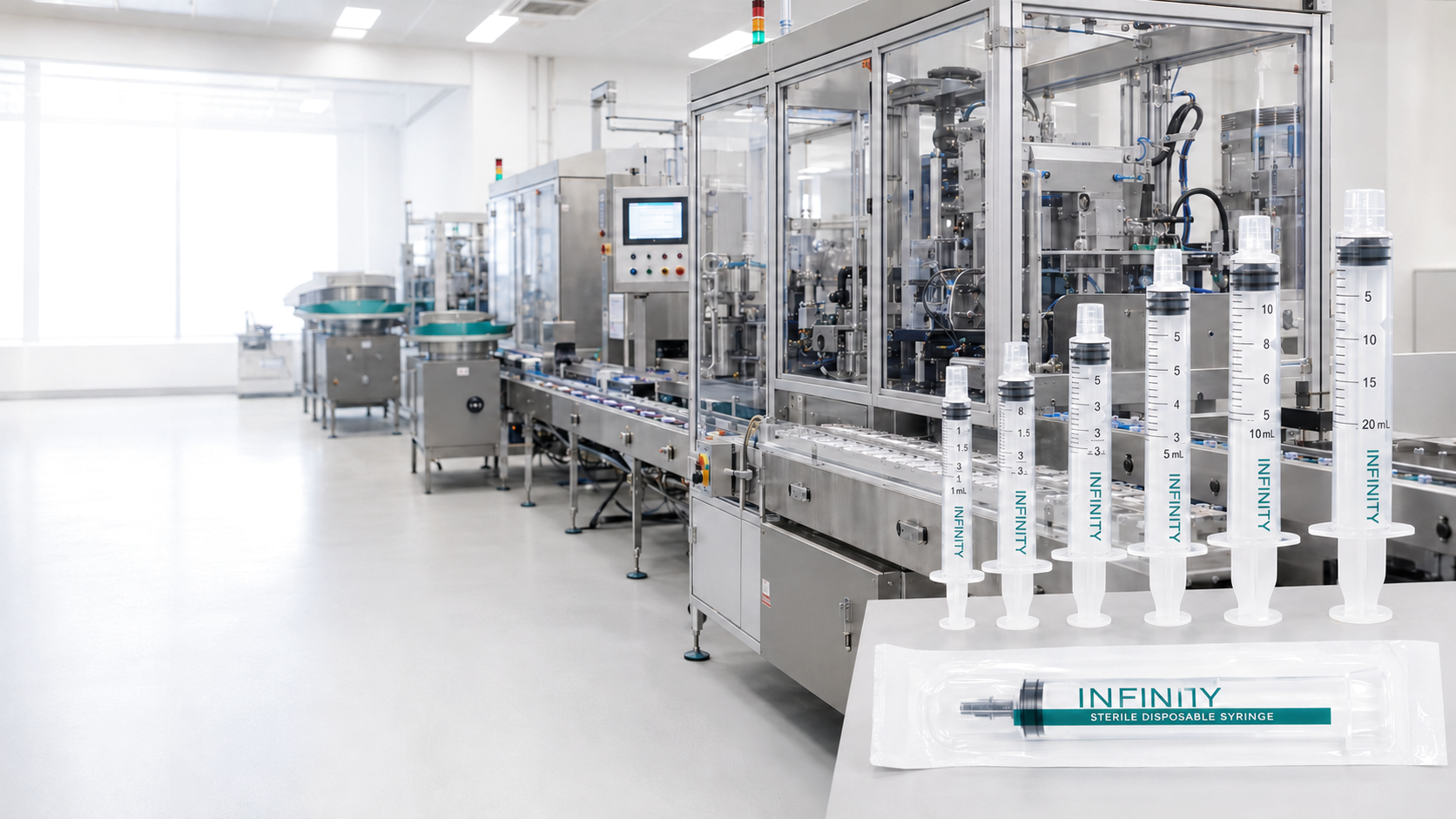
Medical-grade moulding, printing, assembly, packaging and validated sterilisation interface for disposable syringes.

Request feasibility study ↗
Indicative CAPEX
USD 5–14M
Delivery period
15–24 months to validated production and sterilisation release
Installed capacity
Tier 1: 30–80M syringes/year
Regulatory endpoint
ISO 13485 QMS readiness; ISO 7886 product testing, biocompatibility, packaging and sterilisation validation as applicable
01

What the facility produces and why it matters locally

Medical-grade moulding, printing, assembly, packaging and validated sterilisation interface for disposable syringes. The investment case is tested against import dependency, procurement demand, supply resilience, attainable local content and regional export access. Portfolio definition precedes equipment selection so capital is not locked into an incompatible process.
02

Indicative capital band

USD 5–14M. The range covers core equipment, controlled environments, process utilities, installation, qualification, technology transfer and initial training at the stated tier. Preliminary engineering range; excludes land, finance cost, taxes and import duty. Final scope and price are confirmed at the feasibility gate.

03

Footprint and clean environment

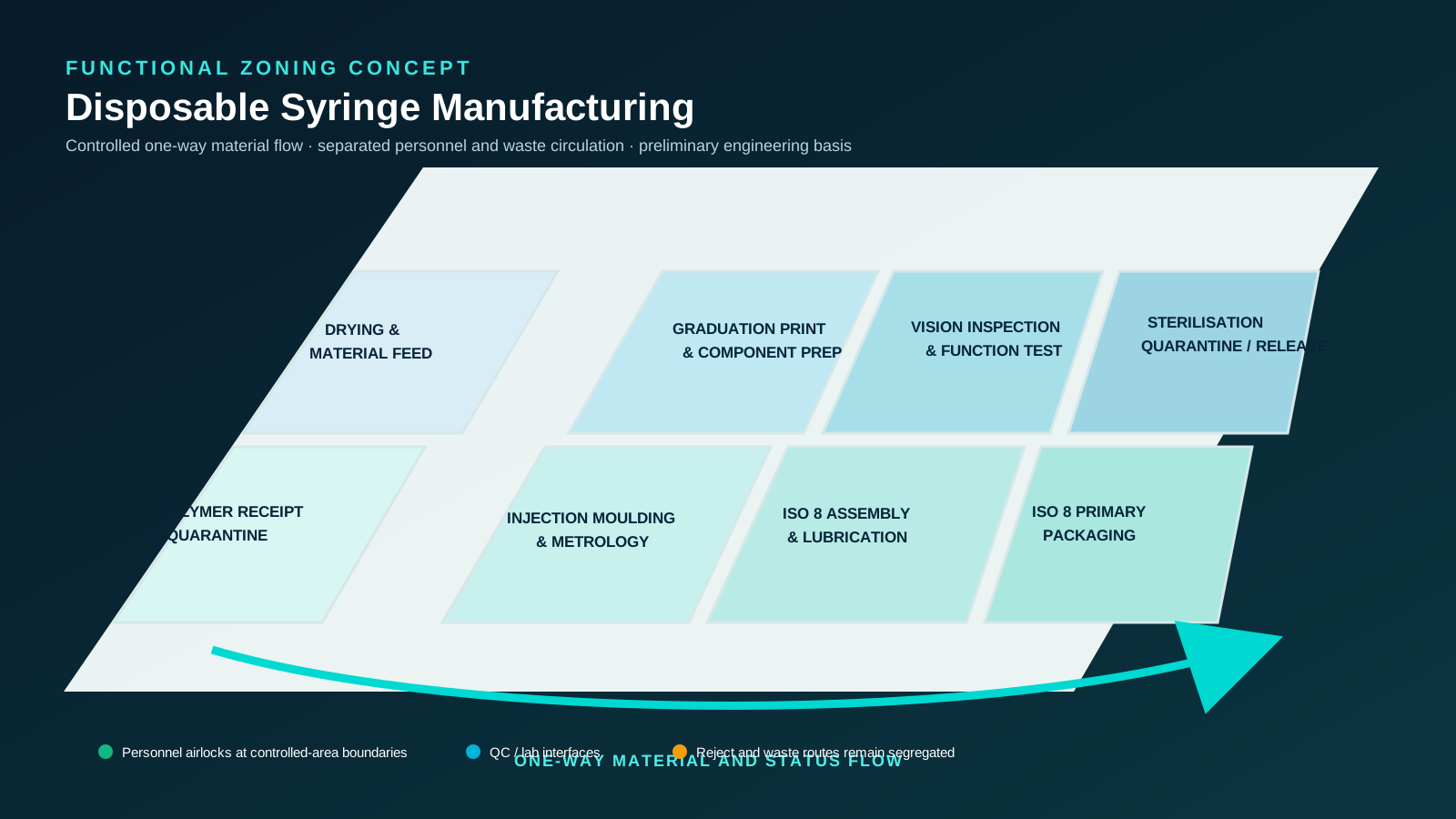
2,500–6,000 m² gross; 700–1,800 m² controlled moulding, assembly and packaging areas, typically ISO 8.

ISO 8 controlled assembly/packaging is typical. Moulding classification is based on open-product exposure and transfer design. Sterilisation loading is segregated from released goods.

04

Programme from design basis to operation

01 Feasibility & design basis02 Architecture & process engineering03 Infrastructure & clean environment04 Equipment procurement and FAT05 Installation, SAT and qualification06 Process validation and training07 Operational handover

15–24 months to validated production and sterilisation release. Permit, authority review, civil-condition, customs and client approval delays sit outside the base programme unless expressly contracted.

05

Installed capacity tiers

Tier 1: 30–80M syringes/year; Tier 2: 120–300M/year; two shifts, size mix and automation dependent.

Capacity assumes qualified materials, stated shifts, planned maintenance and validated yield; it is not the sum of nominal machine speeds.

06

Process flow and utilities

Core process

  • Medical-grade polymer receipt and drying
  • Barrel, plunger and component injection moulding
  • Graduation printing and needle/component preparation
  • Automated assembly and lubrication control
  • Primary packaging and seal verification
  • Sterilisation, residuals and functional release

Site and utilities

Substantial electrical load, chilled water, dry compressed air, HVAC, polymer handling, mould cooling, backup power and validated sterilisation/logistics route.

07

Regulatory and quality endpoint

ISO 13485 QMS readiness; ISO 7886 product testing, biocompatibility, packaging and sterilisation validation as applicable. Facility readiness typically 12–20 months.

Infinity IVD delivers the contracted facility, QMS, validation and dossier work. Certification or market authorisation is granted only by the competent independent authority.

08

Staffing and transfer of know-how

Indicative 55–140 FTE; 8–16 weeks moulding, automation, quality and sterilisation training.

09

Equipment classes and procurement boundary

  • High-precision injection moulding and moulds
  • Automated printing and assembly lines
  • Vision inspection and leak/force testing
  • Blister or pouch packaging equipment
  • EO sterilisation interface or qualified outsourced sterilisation

The feasibility equipment register identifies supplied equipment, client-supplied items, spares, initial consumables, FAT/SAT responsibility, calibration and qualification ownership.

10

Critical process risks and operating economics

  • Dimensional variation and leakage
  • Graduation-print error
  • Excess lubricant or particulate
  • Needle attachment/force failure
  • Package integrity or EO residual failure

Operating economics are issued as a sensitivity model using local labour, utilities, materials, yield, utilisation and financing assumptions; they are not a guaranteed return.

11

Relevant delivery evidence

  • Nigeria — syringe/medical-plastics production scope
  • Azerbaijan — medical-plastics localisation programme
  • Türkiye — syringe production engineering portfolio

Client names and photography are disclosed only with permission; confidential programmes retain a technical envelope rather than an invented attribution.

Review programme evidence ↗
Project desk