
GLOBAL PROJECT DELIVERY

MENA · Africa · Central Asia · Europe · Americas

Direct investor desk ↗
Home/ Projects/ IVF & Fertility Centre
Healthcare facilities · INVESTOR TECHNICAL BRIEF

IVF & Fertility Centre

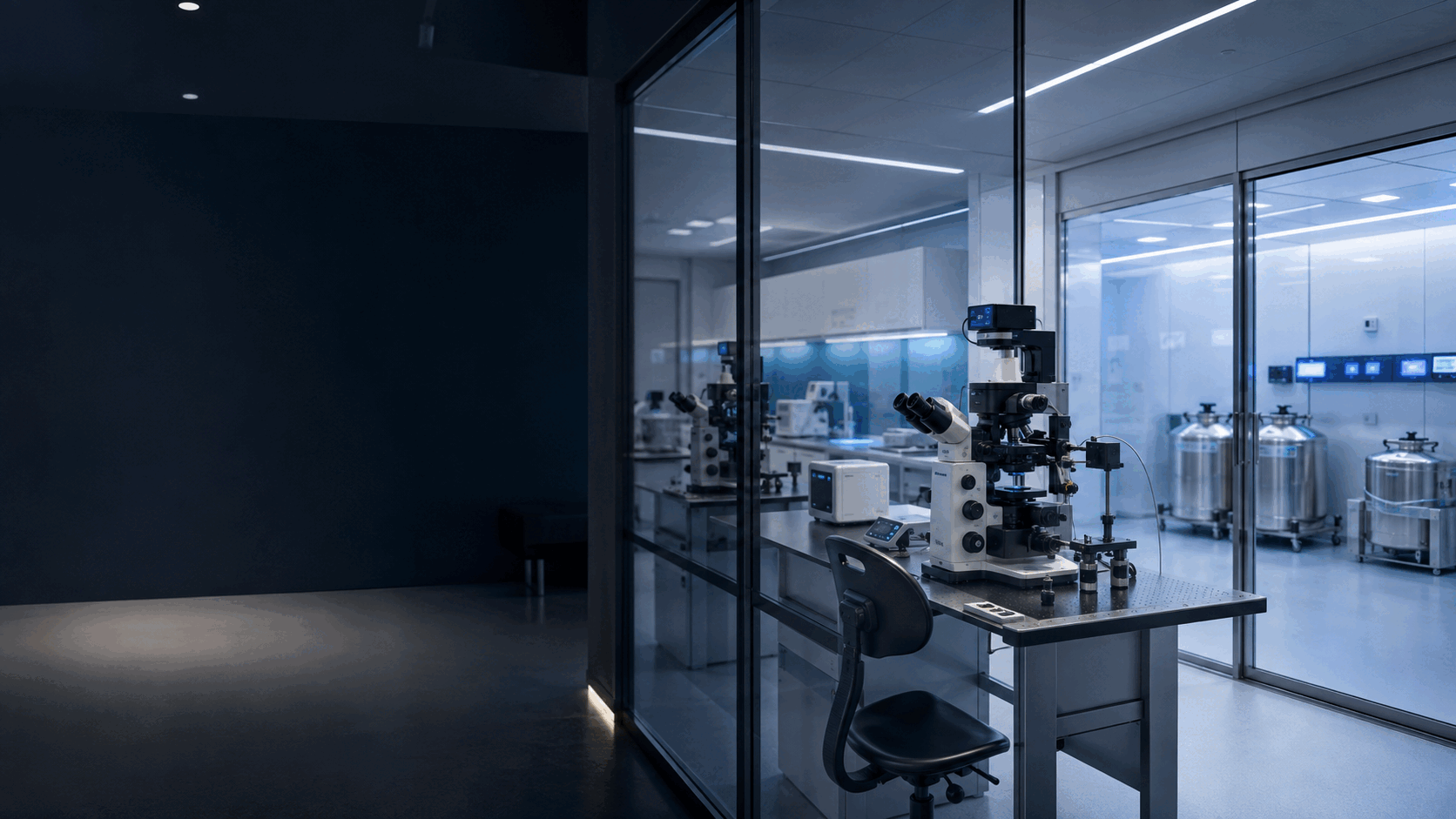
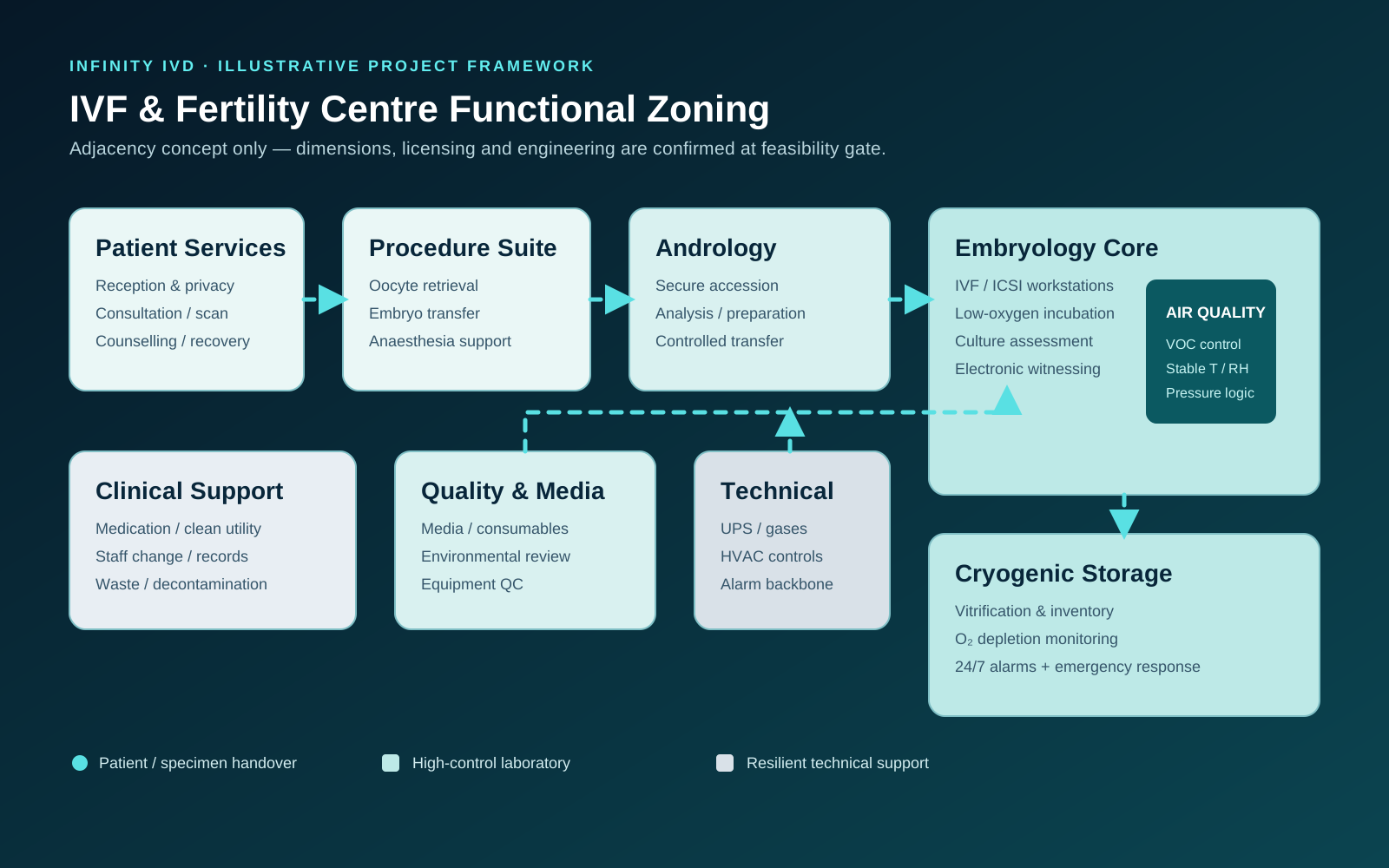
Patient, procedure, embryology, andrology and cryogenic workflows designed as a controlled reproductive-medicine centre.

Request feasibility study ↗
Indicative CAPEX
USD 1.5–5.5M
Delivery period
8–14 months from design basis to operational readiness, licensing dependent
Installed capacity
Tier 1: 500–1,200 cycles/year
Regulatory endpoint
National fertility-clinic and tissue/cell handling licence, cryogenic safety and laboratory quality requirements
01

What the facility produces and why it matters locally

Patient, procedure, embryology, andrology and cryogenic workflows designed as a controlled reproductive-medicine centre. The investment case is tested against import dependency, procurement demand, supply resilience, attainable local content and regional export access. Portfolio definition precedes equipment selection so capital is not locked into an incompatible process.
02

Indicative capital band

USD 1.5–5.5M. The range covers core equipment, controlled environments, process utilities, installation, qualification, technology transfer and initial training at the stated tier. Preliminary engineering range; excludes land, finance cost, taxes and import duty. Final scope and price are confirmed at the feasibility gate.

03

Footprint and clean environment

450–1,500 m² gross; 120–400 m² high-control embryology, procedure and cryogenic areas.

Embryology requires exceptionally stable temperature, VOC, particulate and pressure control; it is commonly engineered to ISO 7/8-equivalent cleanliness without treating the clinical centre as a pharmaceutical cleanroom.

04

Programme from design basis to operation

01 Feasibility & design basis02 Architecture & process engineering03 Infrastructure & clean environment04 Equipment procurement and FAT05 Installation, SAT and qualification06 Process validation and training07 Operational handover

8–14 months from design basis to operational readiness, licensing dependent. Permit, authority review, civil-condition, customs and client approval delays sit outside the base programme unless expressly contracted.

05

Installed capacity tiers

Tier 1: 500–1,200 cycles/year; Tier 2: 2,000–4,000 cycles/year; clinical protocol, staffing and operating days dependent.

Capacity assumes qualified materials, stated shifts, planned maintenance and validated yield; it is not the sum of nominal machine speeds.

06

Process flow and utilities

Core process

  • Patient consultation, diagnostics and cycle planning
  • Oocyte retrieval and controlled transfer
  • Semen preparation and andrology testing
  • Embryology culture, ICSI and time-controlled observation
  • Vitrification and cryogenic storage
  • Traceability, witnessing and outcome-quality review

Site and utilities

Highly stable HVAC, low-VOC finishes, clean gases, conditioned backup power, vibration control, cryogenic ventilation/alarm, purified water and secure data systems.

07

Regulatory and quality endpoint

National fertility-clinic and tissue/cell handling licence, cryogenic safety and laboratory quality requirements. Typical readiness: 8–14 months.

Infinity IVD delivers the contracted facility, QMS, validation and dossier work. Certification or market authorisation is granted only by the competent independent authority.

08

Staffing and transfer of know-how

Indicative 15–45 FTE including reproductive physicians, embryologists, nurses, andrology, quality and cryogenic support; equipment, witnessing and laboratory training over 6–12 weeks.

09

Equipment classes and procurement boundary

  • IVF workstations, incubators and microscopes
  • Micromanipulation and laser systems where selected
  • Andrology analysers and controlled centrifugation
  • Cryotanks, alarm and oxygen-depletion monitoring
  • Electronic witnessing and environmental monitoring

The feasibility equipment register identifies supplied equipment, client-supplied items, spares, initial consumables, FAT/SAT responsibility, calibration and qualification ownership.

10

Critical process risks and operating economics

  • Temperature, pH or VOC excursion
  • Gamete/embryo identification error
  • Incubator recovery instability
  • Cryogenic alarm or inventory failure
  • Vibration and air-quality impact on culture

Operating economics are issued as a sensitivity model using local labour, utilities, materials, yield, utilisation and financing assumptions; they are not a guaranteed return.

11

Relevant delivery evidence

  • IVF centre references disclosed after client permission; technical capability is supported through specialist equipment and workflow integration

Client names and photography are disclosed only with permission; confidential programmes retain a technical envelope rather than an invented attribution.

Review programme evidence ↗
Project desk