
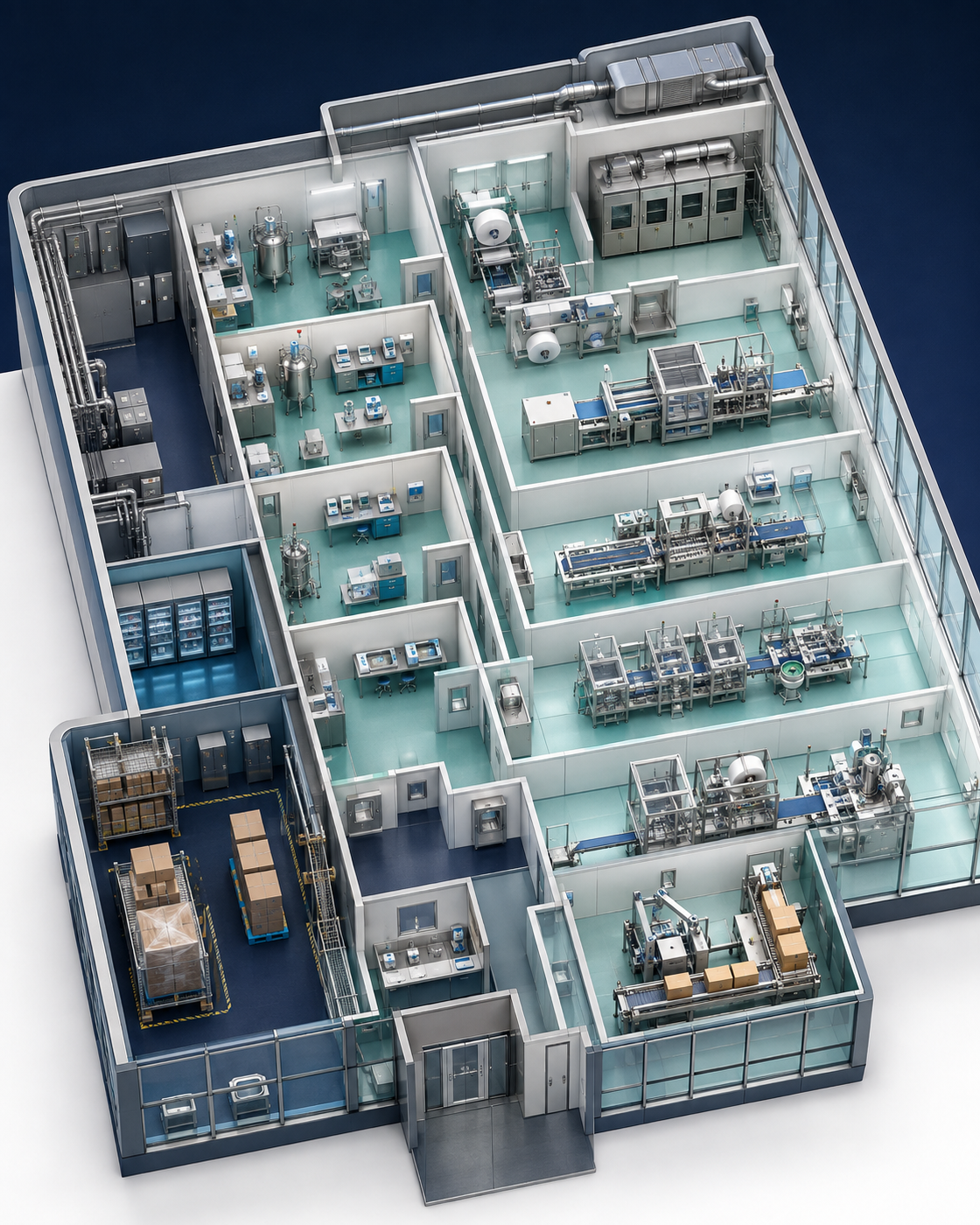
Separate platform from production modules
Phase one should fund the enabling platform that is difficult to expand later: site access, utility corridors, main electrical capacity, water systems, central HVAC strategy, waste routes and regulatory support spaces. Production modules can then be added against demand.
The master plan should show which assets are shared, which are duplicated and where future tie-ins occur without contaminating live operations.
Use measurable expansion triggers
Calendar dates are weak triggers. Better gates include sustained utilisation, signed offtake, regulatory approval of additional products, workforce readiness or confirmed export access. A trigger should specify the evidence, approving body and lead time required before capacity becomes constrained.
Procurement options and supplier lead times must be aligned with those triggers.
Protect qualification and continuity
Adding rooms or equipment can disturb pressure cascades, environmental control, validated utilities and material flow. The change strategy should define construction segregation, shutdown windows, requalification and product bridging requirements.
A low initial CAPEX can become expensive if every expansion stops commercial production.
Compare lifecycle economics
Phasing may increase total nominal cost through repeated mobilisation, smaller equipment packages and duplicated qualification. Its value comes from delaying uncertain capital and learning from actual demand. The financial model should compare NPV, downtime, escalation and working capital—not simply phase-one price.
The selected pathway should preserve an investable next phase while avoiding premature capacity.
Investor checklist
- Shared infrastructure sized for the end state
- Future zones and utility tie-ins reserved
- Evidence-based expansion triggers approved
- Live-operation change and requalification planned
- Lifecycle NPV compared with single-phase delivery
This briefing is a decision framework, not legal, regulatory or financial advice. Requirements vary by jurisdiction, product and facility scope. Certification and market authorisation remain subject to competent-authority decisions.
Develop a phased-capital master plan
Translate the briefing into a project-specific scope, responsibility map and feasibility workplan.